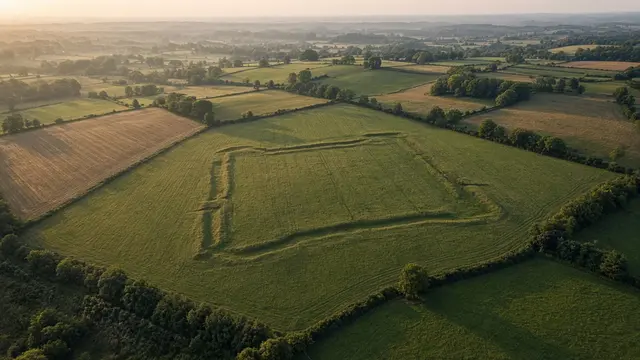
The UK is the best country in the world to be a detectorist: the hobby is legal, the recording system is world-class, the soil is absurdly rich — and the national LiDAR survey is free. Here's the whole legal and practical picture in one page.
The law in England & Wales, short version
- Permission is everything. All land — including beaches, moors and footpaths — belongs to someone. Detecting without the landowner's permission is trespass, and finds without permission can be theft. A written agreement (there are standard forms) settles finds-sharing up front.
- The Treasure Act 1996. Finds that qualify as treasure (precious-metal objects over 300 years old, coin hoards, and since the 2023 amendment some exceptional non-precious finds) must be reported to the coroner within 14 days. Museums may acquire at full market value, shared finder/landowner — being reported pays.
- Record with the PAS. The Portable Antiquities Scheme records non-treasure finds voluntarily. It's how your hammered penny becomes data — and how detectorists earned their standing in British archaeology.
- Scheduled monuments are off-limits. Detecting on a scheduled monument is a criminal offence. Check before you ask for a permission — the maps are public.
- Beaches and foreshore: much of the foreshore is Crown Estate, which permits recreational detecting on most of its beaches; local councils may have their own rules on popular beaches.
Why UK ground is so good
- Continuous coinage since the Iron Age — Celtic staters, Roman denarii, Saxon sceattas, medieval hammered silver, milled coinage: every century dropped money in the same fields.
- A footpath network older than the kingdom — people walked the same routes for a thousand years; every stile, ford and field gate was a loss point.
- Pasture that was never deep-ploughed — finds still at detectable depth after centuries.
- Markets, fairs and church paths — documented on tithe and OS maps going back two centuries.
Research: England's unfair advantage
England has a complete national 1 m LiDAR survey — free — and the densest historic mapping on Earth. Stack them: a hollow way on LiDAR that's a footpath on the 1880s OS map, heading for a lost ford below a church — that's a permission worth asking for. The full UK LiDAR guide is here, and the layers are already stacked on our free map.
Free research map for the UK
LiDAR terrain, historical maps and ancient routes on one free map. Mark spots, get directions in the field, and record your GPS track so you never search the same ground twice. No account needed.
Open the free map →FAQ
Do I need a licence to metal detect in the UK?
No licence in England and Wales — landowner permission is the legal basis. Northern Ireland requires a licence for archaeological searching, and Scotland has its own reporting regime.
What happens if I find treasure?
Report to the local coroner within 14 days (the FLO at your PAS scheme will help). If a museum acquires it, a reward at full market value is normally split between finder and landowner.
Can I metal detect on UK beaches?
On most of them yes — the Crown Estate permits recreational detecting on much of the foreshore, and many council beaches allow it. Check locally for exceptions.